Alopecia areata or alopecia barbae is a condition where you lose your hair, or small circular spots that remain in order for a short period, or who are still in some cases permanently. Some people experience when they lose all their hair, and some that stop growing hair on the scalp and the rest of the body. The first condition is known as "alopecia totalis" and the latter as "alopecia universalis". Anyone can be affected by alopecia areata beard, and no one is actually excluded from the opportunity to take this place.
Although known to affect the scalp can also spread to other parts of the body, in which patches of hair loss or lack of position you can move. He is known as an autoimmune disease, because I can not understand why this happens in healthy people usually explained, but there are some external elements that can solve this problem, like a virus or certain medicines. People do other things that touch the hair, the hair follicles, causing hair loss later, we'll get into something. If you have a history of this illness in the family, then you are likely to develop, for it is inherited. Find out what causes this disease, which is usually caused when people worry about their hair. There are a considerable number of treatment methods is that we continue to look into the well.
Types of hair loss
Apart from alopecia barbae, there are other diseases, hair loss in a person, but all should be of a different nature. Find out what these guys are.
Commonly known as male pattern baldness, as in this case higher in men: * androgenetic alopecia.
* Cicatricial alopecia: Also known as alopecia, this type of hair loss is due to inflammation that damages the hair follicles to scars. This slows the growth of new hair, and can be seen in various skin diseases such as lichen planus and lupus erythematosus.
* Telogen effluvium: This type of hair loss is caused by the use of certain medications, stress, fever, and even pregnancy.
* Trichotillomania: a mental disorder is responsible for the production of a sofa hair of his / their own. This manual pull hair leading to this condition.
* Traction Alopecia: techniques of hair follicle and the constant applied stress makes the loss of hair, and can only grow if you stop the process that can lead to scarring were.
Alopecia areata barbae causes
Although known to affect the scalp can also spread to other parts of the body, in which patches of hair loss or lack of position you can move. He is known as an autoimmune disease, because I can not understand why this happens in healthy people usually explained, but there are some external elements that can solve this problem, like a virus or certain medicines. People do other things that touch the hair, the hair follicles, causing hair loss later, we'll get into something. If you have a history of this illness in the family, then you are likely to develop, for it is inherited. Find out what causes this disease, which is usually caused when people worry about their hair. There are a considerable number of treatment methods is that we continue to look into the well.
Types of hair loss
Apart from alopecia barbae, there are other diseases, hair loss in a person, but all should be of a different nature. Find out what these guys are.
Commonly known as male pattern baldness, as in this case higher in men: * androgenetic alopecia.
* Cicatricial alopecia: Also known as alopecia, this type of hair loss is due to inflammation that damages the hair follicles to scars. This slows the growth of new hair, and can be seen in various skin diseases such as lichen planus and lupus erythematosus.
* Telogen effluvium: This type of hair loss is caused by the use of certain medications, stress, fever, and even pregnancy.
* Trichotillomania: a mental disorder is responsible for the production of a sofa hair of his / their own. This manual pull hair leading to this condition.
* Traction Alopecia: techniques of hair follicle and the constant applied stress makes the loss of hair, and can only grow if you stop the process that can lead to scarring were.
Alopecia areata barbae causes
Alopecia Areata
Alopecia Areata
Alopecia Areata
Alopecia Areata
Alopecia Areata
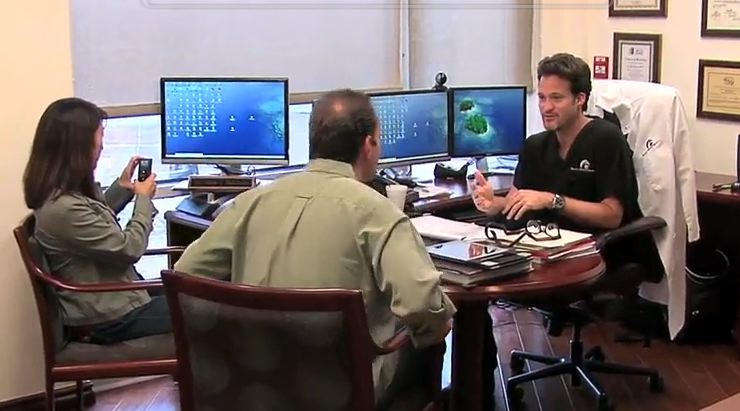
Alopecia in WomenI'm heading to Florida today for an unusual hair transplant... we're broadcasting it live at 10:00 EST and 1:00 EST on Friday, November 18. Details below on my second hair transplant with the lovely and talented Dr. Alan Bauman. It will also be broadcast by Hair Guru Spencer Kobren.
The event kicks off at approximately 10:00am EST when Dr. Bauman will harvest individual hair follicles from the back of Nalty’s scalp using the Follicular Unit Extraction, or FUE, method. A second broadcast will take place at approximately 1:00pm EST, where he will show how those follicles are carefully implanted into Nalty’s scalp to produce a permanent, natural hairline. The 1:00pm webcast will also include a live ‘call-in’ Q&A segment hosted by best-selling author and The Bald Truth’s radio talk show host, Spencer Kobren.
“The procedure was pretty much pain free, and it’s actually an engaging process that’s more art than science,” says Nalty. “I love sharing it with my viewers because I feel like Fred Rogers doing a tour of a candy shop.”
Hair loss can be a painful experience for both men and women, but today, scientific advances have made hair loss a treatable condition and hair transplants can now be performed 100% undetectably without the pain, scars and long recovery times that used to be associated with the procedure,” explains Bauman. “I hope viewers can learn from Nalty’s public journey and discover the abundance of resources available from the relatively small number of qualified doctors who specialize in hair loss.”
First Live Hair Transplant on YouTube
An Unlikely Form of Entertainment Joins YouTube’s New Lineup:
Internationally Renowned Hair Transplant Surgeon Dr. Alan J. Bauman and YouTube Celebrity Kevin “Nalts” Nalty to Broadcast the First YouTube LIVE Hair Transplant on November 18
November 18, 2011
Boca Raton, Florida – Dr. Alan Bauman, a leading hair transplant surgeon and founder of Bauman Medical Group, will perform the first-ever hair transplant broadcast live on YouTube on Friday, November 18. YouTube “Weblebrity” Kevin “Nalts” Nalty, whose videos have been viewed more than 240 million times, will be documented as he receives his second hair transplant with Dr. Bauman on YouTube’s new, highly-anticipated interactive live webcast platform. The surgery makes for compelling yet unlikely entertainment for the online video giant that is also debuting new live channels from celebrities like Tony Hawk, Madonna, Ashton Kutcher, Shaq and Rainn Wilson.
The event kicks off at approximately 10:00am EST when Dr. Bauman will harvest individual hair follicles from the back of Nalty’s scalp using the Follicular Unit Extraction, or FUE, method. A second broadcast will take place at approximately 1:00pm EST, where he will show how those follicles are carefully implanted into Nalty’s scalp to produce a permanent, natural hairline. The 1:00pm webcast will also include a live ‘call-in’ Q&A segment hosted by best-selling author and The Bald Truth’s radio talk show host, Spencer Kobren.
Bauman and Nalty already proved the appeal of “behind the scenes” video of a transplant procedure, Dr. Bauman transplanted 1958 follicular units totaling nearly 5,000 hair follicles on Nalty in 2009, and theirvideos documenting the event have been viewed more than 250,000 times. The same year, Dr. Bauman also participated in a live broadcastwith Greg Benson, actor and director with MediocreFilms, which became the most-watched live hair transplant procedure in history, amid a flurry of emails, blog-posts and ‘tweets.’
Bauman and Nalty are anticipating even more response to Friday’s event as consumer interest in hair restoration is higher than ever, and new techniques like NeoGraft FUE, which will be used again for Nalty’s procedure, have made hair transplantation a less invasive and less detectable option for the estimated 100 million American men and women with thinning hair.What is NeoGraft/FUE?FUE or Follicular Unit Extraction is an advanced minimally-invasive hair transplant technique which, according to ISHRS statistics, has experienced an exponential increase in volume worldwide over the past several years. FUE eliminates the need for doctors to remove a large strip of skin from the back of the scalp—a procedure known as a linear or strip-harvest—and therefore leaves no linear scar.The FDA-cleared NeoGraft is a dramatic advancement over previous manual FUE methods which were more time consuming and less accurate. Years ago, Dr. Bauman became the first Diplomate of the American Board of Hair Restoration Surgery to routinely use NeoGraft device for mechanical FUE which comprises 90% of all transplants he performs today.“FUE is an extremely effective surgical option for patients that allows for a quicker, more comfortable recovery, less post-op activity restrictions, as well as avoiding the tell-tale linear scar associated with traditional hair transplants,” says Dr. Bauman. However, patients should keep in mind that a natural FUE hair transplant still requires keen artistry and precision and should be performed by a surgeon with extensive specialized hair transplant training, certifications and experience.Key Benefits of NeoGraft FUE:- Least invasive hair transplant available No ‘tell-tale’ linear scar where the donor hair is harvested Shorter, more comfortable recovery No stitches or staples to be removed Less activity restrictions after surgery Very short haircuts are possible after surgery Transplants more than twice as many hair grafts in a single surgery as the previous manually-performed FUE surgery in the same amount of time
“The procedure was pretty much pain free, and it’s actually an engaging process that’s more art than science,” says Nalty. “I love sharing it with my viewers because I feel like Fred Rogers doing a tour of a candy shop.”
Hair loss can be a painful experience for both men and women, but today, scientific advances have made hair loss a treatable condition and hair transplants can now be performed 100% undetectably without the pain, scars and long recovery times that used to be associated with the procedure,” explains Bauman. “I hope viewers can learn from Nalty’s public journey and discover the abundance of resources available from the relatively small number of qualified doctors who specialize in hair loss.”
To see the historic YouTube LIVE broadcast, please visithttp://www.youtube.com/nalts at 10am EST and 1pm EST, and watch for updates on http://www.twitter.com/nalts andhttp://www.twitter.com/dralanbauman. For more information on the Bauman Medical Group, please visit www.baumanmedical.com or call 1-877-BAUMAN-9 or (561) 394-0024.
ABOUT DR. ALAN BAUMAN:Alan J. Bauman, M.D., founder of Bauman Medical Group in Boca Raton, Florida, is a full-time board-certified and internationally renowned hair transplant surgeon whose pioneering work has been featured extensively in the national and international print and television media, such as Newsweek, The New York Times, Cosmo, Vogue, Allure, Men’s Health, Today Show, The Early Show, Good Morning America, Extra, Access Hollywood and Dateline NBC.Dr. Bauman is recognized within the medical profession as top U.S. medical expert on the treatment of hair loss in men and women. A board-certified hair restoration surgeon, Dr. Bauman was the first to demonstrate ‘live’ the FUE method of hair transplantation at the 2003 International Society of Hair Restoration Surgery Orlando Live Surgery Workshop and the first to demonstrate the NeoGraft FUE device at the ISHRS Orlando Live Surgery Workshop in 2010. His practice is divided equally between male and female patients, and Dr. Bauman provides state-of-the-art diagnostic procedures and a multi-therapy approach to the medically treatable condition of hair loss. Dr. Bauman is a member and often a featured speaker at the American Academy of Anti-Aging Medicine and the International Society of Hair Restoration Surgery Annual Scientific Meetings.
"Who's the best hair transplant doctor?" is a question I get a lot.
It's the question I asked dozens of people (who for reasons I'll leave out, have intimate knowledge of hair transplant physicians). Specifically my question was, "if you were personally going to get a hair transplant, which doctor would you choose."


The most common answer was Dr. Alan Bauman of Bauman Medical (Boca Raton, Florida). So I went to see him about two years ago (see YouTube Legend Chooses...) And it was one of the best decisions I've made. Instead of the Bozo look I was genetically predisposed to, my hairline looks better now than it did in my late 30s. It's so fun to look at photos and cringe... then look into the mirror and smile.
Now I'm sure there are other surgeons that are good at hair transplant but there are some things I don't chance on a national chain or mystery doc. Many are too new, and others haven't updated their practice with new technology.
So I'm going back for seconds! Official news. I'm scheduled to return to Florida for a sequel on November 18, 2011 (see events tab on my YouTube page, which will be updated with live forum). See ya live for the most entertaining live hair transplant the world has seen... giveaways, pranks, and lively banter. Yeyy!

Finally the exorbitant physical pain associated with male-pattern hairloss has been documented by The Onion, a hysterical parody of news media. In a report titled "Male Hairloss is 7 Times More Painful Than Child Birth," the article reported...
"Clinical studies show that as hair gradually separates from the scalp, men experience intensifying waves of all-consuming pain equivalent to having their insides ripped out through the thousands of tiny follicles on their head," said Vincent Kwan, who led the all-male research team that carried out the study. "While strong uterine contractions and tearing of the vaginal walls undoubtedly cause a degree of discomfort among women in labor, balding men would give anything to experience those sensations instead of lying awake and suffering all night as their hair thins."

Poor Jeremy Piven (Runaway Jury, SpyKids, etc.). The guy knows the criticality of hair to his career. So he discretely gets a hair transplant, then has TMZ up his ass (see photo courtesy of Boss for Hairloss).
The article mentions me (Nalts) and Greg Benson (Mediocrefilms). I haven't talked to "The Best U.S. Hair Transplant Doctor" in a while, but I'm guessing Dr. B has his hands full with "Donor Scar Camouflage" treatments (I'm going to trademark that).
Bauman is one of the leaders of "follicular unit extraction" (FUE) using NeoGraft, which was shown on Rachael Ray “Plastic Surgery Breakthroughs." That's how he harvested my follcicles from the donor area without the use of a scalpel, stitches or staples. He told me last year that he's been increasingly asked to use FUE hair transplants to hide bad donor scars. Poor Dr. B. He's the best in his field, so he's gotta clean up other people's mess.
Boss of Hairloss writes, "no procedure can be 100% scar-free, after a matter of days healing is complete and undetectable from a social distance–even with a very short haircut."
I'd go a step further. I had some of the globe's leading hair transplant experts scrutinizing my head with their fingers, magnifying glasses and combs. Ain't nobody finding my scar! :)

Check out the Dateline episode featuring The Follicle Five. Surgeonofnalts (Dr. Alan Bauman) makes an appearance, and you can see the difference it made for his patient.
a hair,
alan,
balding,
bauman,
bauman medical,
best,
dateline,
doctor,
extraction,
follicular,
fue,
guys,
hair transplant,
states,
unit,
united
|
I'd heard buzz about sexual side effects of Propecia (finasteride) and Avodart (both are Rx medications to treat male pattern hairloss), but now a study about the link is getting some serious news (see USAToday).
Reports USAToday: The drugs — prescribed to treat a common urological condition called benign prostatic hyperplasia (BPH) and baldness — work by blocking androgen. In the case of BPH, this helps reduce the enlarged prostate, making urination easier.
But there's a downside. "We need androgen for erectile function, libido and ejaculation, and for just feeling good," said Abdulmaged M. Traish, a professor of biochemistry and urology at Boston University School of Medicine.
No response from Merck (see Propecia FAQ or Merck news), but it takes a while to respond to studies like this. I wouldn't be surprised if there was no response, and GSK's Avodart isn't even indicated for male-pattern hairloss.
The prescribing information on Propecia indicates slightly increased sexual issues relative to placebo (see chart). But, says the PI, "Resolution occurred in men who discontinued therapy with
PROPECIA due to these side effects and in most of those who continued therapy."
Here's the study from "The Journal of Sexual Medicine" (via Wiley.com), and here's an abstract that seems less sensational than the news reports: "Although the adverse side effects of these agents are thought to be minimal, the magnitude of adverse effects on sexual function, gynecomastia, depression, and quality of life remains ill-defined."
The significant update is not the relationship between sexual adverse events, but the longer term impact (after people stop taking the medication). This also is addressed in Proscar's prescribing information (see link), which is finasteride in a 5mg dose to treat prostate.
Bottom line: every approved drug has benefits that the FDA concludes (at launch) outweigh the risks (or they wouldn't approve it). Some guys care deeply about hair, and are willing to take a chance on the possibility of sexual side effects... which seems rare but possible.
So it's a personal decision of risk versus reward. Hopefully people realize that no hairloss medication radically grows back hair... Rogaine, Propecia and some of the lotions/potions can help hair grow slightly and maybe thicker. However a significant change in appearance is, today, only possible through a hair transplant (in my informed opinion).
Since hair transplant surgeons encourage using Propecia to preserve the patient's hair after a transplant (and it may even help the newly transplanted hair), this will be the group of physicians to watch. If they start shying away from the medications it will be an important cue.
That said, a hair transplant surgeon is not without bias... some sell Propecia and rely on it to cultivate longer term relationships with patients. And then there's this age-old debate: a patient losing more hair is a potential repeat customer. On the other hand, a transplant recipient untreated with Propecia may continue to lose hair. That could look silly: a fortified "front line" and continued male-pattern hairloss behind it) and reflect poorly on the physician. Dr. Rassman has some strong opinions on these matters, and is usually quick to play "devil's advocate" on his "Balding Blog."
Note that while I once marketed Propecia, I'm far from a medical professional... and have no dealings with Merck. These are just my observations reading the same information you can find online.
Reports USAToday: The drugs — prescribed to treat a common urological condition called benign prostatic hyperplasia (BPH) and baldness — work by blocking androgen. In the case of BPH, this helps reduce the enlarged prostate, making urination easier.
But there's a downside. "We need androgen for erectile function, libido and ejaculation, and for just feeling good," said Abdulmaged M. Traish, a professor of biochemistry and urology at Boston University School of Medicine.
No response from Merck (see Propecia FAQ or Merck news), but it takes a while to respond to studies like this. I wouldn't be surprised if there was no response, and GSK's Avodart isn't even indicated for male-pattern hairloss.
The prescribing information on Propecia indicates slightly increased sexual issues relative to placebo (see chart). But, says the PI, "Resolution occurred in men who discontinued therapy with
PROPECIA due to these side effects and in most of those who continued therapy."
Here's the study from "The Journal of Sexual Medicine" (via Wiley.com), and here's an abstract that seems less sensational than the news reports: "Although the adverse side effects of these agents are thought to be minimal, the magnitude of adverse effects on sexual function, gynecomastia, depression, and quality of life remains ill-defined."
The significant update is not the relationship between sexual adverse events, but the longer term impact (after people stop taking the medication). This also is addressed in Proscar's prescribing information (see link), which is finasteride in a 5mg dose to treat prostate.
"Prolonged adverse effects on sexual function such as erectile dysfunction and diminished libido are reported by a subset of men, raising the possibility of a causal relationship."There's a guy who has devoted a website to this issue, and it's the first Google result if you search Propecia side effects: http://www.propeciasideeffects.com/
Bottom line: every approved drug has benefits that the FDA concludes (at launch) outweigh the risks (or they wouldn't approve it). Some guys care deeply about hair, and are willing to take a chance on the possibility of sexual side effects... which seems rare but possible.
So it's a personal decision of risk versus reward. Hopefully people realize that no hairloss medication radically grows back hair... Rogaine, Propecia and some of the lotions/potions can help hair grow slightly and maybe thicker. However a significant change in appearance is, today, only possible through a hair transplant (in my informed opinion).
Since hair transplant surgeons encourage using Propecia to preserve the patient's hair after a transplant (and it may even help the newly transplanted hair), this will be the group of physicians to watch. If they start shying away from the medications it will be an important cue.
That said, a hair transplant surgeon is not without bias... some sell Propecia and rely on it to cultivate longer term relationships with patients. And then there's this age-old debate: a patient losing more hair is a potential repeat customer. On the other hand, a transplant recipient untreated with Propecia may continue to lose hair. That could look silly: a fortified "front line" and continued male-pattern hairloss behind it) and reflect poorly on the physician. Dr. Rassman has some strong opinions on these matters, and is usually quick to play "devil's advocate" on his "Balding Blog."
Note that while I once marketed Propecia, I'm far from a medical professional... and have no dealings with Merck. These are just my observations reading the same information you can find online.
During the live patient viewing at ISHRS's national meeting, a lot of people wanted to know how long it's been as they examined my new hairline and the donor areas.
Without moving around my hair and using a scope, nobody was able to notice any donor scars since FUE (follicular unit extraction) doesn't involve a surgical slice of the scalp- it's individual follicles and done while you're wide awake and numb.
My friend Joe Shields had taken the photo on the left before I had the transplant (late summer 2009) and we tried to replicate it last month (about 14 months post surgery). There are some variations in the lighting and smile, but I carefully chose the closest shot... some of the "before pictures" were way worse than this one. But I resent when people manipulate before and afters so I'm trying to avoid that here.
The photo on the very bottom shows why I wore a hat and avoided profile shots. The soldiers were not exactly in full force up there...

after,
before,
extraction,
follicular,
fue,
hair,
JOE,
PHILADELPHIA,
PHOTOGRAPHY,
SHIELDS,
transplant,
unit
|


The hair transplant doctors gather annually at the International Society of Hair Restoration Surgery meeting, and this year's event was in Boston in October (2010).
I gave a presentation with my physician (Dr. Alan Bauman) about social media for physicians, and then was his "model patient" during a live patient viewing. The doctors run their fingers through your hair, and one guy even brought a little eye scope to inspect the work. I'm sure I experienced weirder moments in 2010, but this one would certainly find a place in the top 10. Here are some photos courtesy of Dr. B.
I love my hair. It's a Sesame Street muppet singing about her hair, and it's a viral hit that teaches self esteem and diversity. But what about the bald people? And I don't see any mullet representation. And this is the poison we're feeding out kids via television?

Here's a recent photo taken by my friend Joe Shields, who took the headshots on my book and consulting site. If you can get past the "weepy puppy" look, you'll see the hairline has visibly improved. The collection of photos from "Hair Insider" are here.
As someone who marketed to men with male-pattern hairloss (Propecia/Merck), I saw many of the advertisements for lotions, potions, medications and transplants. I know the usual tricks of before and after shots. Just like the "before and after" diet photos, lighting can be an easy way to expose balding hair or hide it quite well. I hope this week to get Joe Shields, who took the photos for my Nalts Consulting page and my book, "Beyond Viral," to do a similar shoot to see how the past orbit around the Earth has changed me. For those of you unfamiliar with my experience, here's the video that documented my procedure.
In summary, a few key takeaways:
Today I received an e-mail from someone considering Dr. Alan Bauman's FUE process, and I showed him a few videos I grabbed without much thought. These show some progress, and I have spent almost no time picking these few.
Here's a video I did immediately after the hair transplant... you'll see my hairline quite visibly when I play the marketer. Of course my role as the attorney involved shaving the head and producing a faux "comb over."
DURING
I shot this about 9 months ago... in the interim period between the transplant and the 1-year milestone where much of the new hair is visible.
BEFORE:
I shot this about 9 months ago... in the interim period between the transplant and the 1-year milestone where much of the new hair is visible.
BEFORE:
1) Check me out appearing on "iChannel," which shows my shaved head- this makes my hairline very visible
2) Here's me on HBOLab's "Hooking Up," where I had the benefit of makeup and lighting to hide the hairline.
Unfortunately most of my pre-transplant videos have me conveniently covering my head with a hat, or carefully cropping out the head (like this one).
What do you think?
I knew that I wore the hat, in part, to hide the hairline. But I'm now noticing the most significant change...
Before the hair transplant, my hat was like my wallet and keys. I didn't leave home without them. Now my hat is like my sunglasses... an optional accessory. This change hasn't been a conscious one, but has become obvious to me on reflection and by reviewing my many recent hatless videos.
- The results, I think, speak for themselves... and these videos weren't selected carefully... I just grabbed a few random ones.
- It's quite nice not to need the hat, but wear it when I wish. I didn't realize I was that insecure... I told myself the hat was something I liked wearing, and part of my "brand."
- An FUE isn't an FUE. FUE stands for "follicular unit extraction," which requires no incision, meaning it's less painful and produces no scar (learn about it in this instructional video I shot with Dr. Bauman). It's still relatively new, so you'll want to know how many procedures your physician has done. Historically, FUE was reserved for "touch up" procedures, but both myself and Greg Benson (Mediocrefilms) are really happy with the mass amounts of hair Dr. Bauman transplanted in one session. In fact Benson had additional treatments, and it's really helped repair his Bosley transplant from years ago.
- Remember it takes time to see the results.
- My biggest concern now is not the newly transplanted hair, but the area behind them. I've been trying to keep up with the Propecia and Rogaine to avoid having a weak area behind the sturdy new "front line" Dr. B gave me.

Here are some time-lapsed photos, including the most recent (bottom right) I took after a haircut last night (see video), and we're still not at the one-year anniversary of the hair transplant I documented on YouTube.
See the educational video about FUE (follicular unit extraction) called "5 Minute Hair Transplant" that I made with surgeonofnalts to show people how easy and fast the experience was. People still think transplants hurt or will produce baby-doll effects (retro).
@dralanbauman, you da man. I'm going to try to organize a series of photos by date. But you can see some progress based on these pre-surgery and recent photos. The frowns and smiles? Obviously spoofing the tricks often used in goofy pre/post photos. A common trick is changing the lighting, and I hope I have some photos that remove such factors.
The three people who have noticed the improvement the most: My mom, my client, and Joe the Hair Stylist (seen on "Bad Haircut Prank").
I read a comment on a blog from a jaded patient who claims FUEs have a lower "stick" rate than hair transplanted from a strip of hair (this guy must have a sad story because he occupies a lot of his time with negative comments on this blog, YouTube and forums).
I did expect a slightly lower success rate as one of the minor potential downsides of FUEs, and here's an article on the subject. Again- the traditional method of hair transplant is to remove a strip of "donor" hair via incision from the back of the head, then suture it together.
For a guy that doesn't like "surgery" or blood, FUE was far more attractive, and I was willing to accept the possibility that the hairs wouldn't stick as well.
For me, this was offset by a) the fact that I'm a good candidate for FUE (not everyone is), b) I like the variety of hairs in the new region (density/type) because it looks more realistic than the course ones from the back, c) I'm confident that we're advancing on FUE success rates.
What's important to realize is that most new technology advances aren't perfect from day one. Look at the first computer tablet or even the first iPhone. If you judge today's iPad or iPhone by those standards, you'll find great improvements.
I'd assume the same to be true with FUE (although I can't find data yet- it may or may not exist). As doctors get smarter about their extraction tools (Dr. Bauman used Neograft from me, which is quite different from using leeches or toothpicks to wedge the follicles out individually).
Unlike iPads, however, FUE-transplanted hair is not FUE-transplanted hair. There are many physician-specific variables, just like with traditional incision transplants... and I don't think there's a hair-transplant physician that has migrated entirely to FUE. It's also vital to have a good FUE extractor dude (whatever they're called) who knows which hairs, what circumference is ideal, and how to pluck and save 'em.
So it's worth asking your doctor about experience, and consider that "little things" mean a lot. The circumference around each follicle is maybe the biggest factor. Then there's how they're sucked, stored, etc.
The key point for me is this: accept that as an "early mover" in any new technology you're not going to get the benefits of the laggards. So you have to decide: do I want to wait until it's sorted itself out, or enjoy something new as soon as possible? It depends. For FUE, I thought Bauman had enough experience to comfort me. But at the same time, I'm not buying the first version of iPads. I'll wait until the second generation and let the kinks work themselves out.
Here's a photo I just took (March 21, 2010) after a haircut, so you can better see the hairline.
This is almost exactly 7 months after Dr. Bauman did his magic on me (should be a bit more than 50% of the benefit visible now, with 90% after a year).
It's hard to compare the location of the hairline in these photos, but you do see a density (different lighting conditions aside) that I didn't have before. Basically if I let my hair grow before I'd get these nasty patches and then blank spaces.
Much more even now. I may go hat free when it gets hot! :)

Compare to a few photos I took before the transplant. Whatya think?


This is almost exactly 7 months after Dr. Bauman did his magic on me (should be a bit more than 50% of the benefit visible now, with 90% after a year).
It's hard to compare the location of the hairline in these photos, but you do see a density (different lighting conditions aside) that I didn't have before. Basically if I let my hair grow before I'd get these nasty patches and then blank spaces.
Much more even now. I may go hat free when it gets hot! :)

Compare to a few photos I took before the transplant. Whatya think?


According to a recent RealSelf.com survey (see press release by Dr. Bauman), guys want better hairlines second only to whiter teeth... and 20% of the 2000 plus adults said they wanted hair transplants.
Bauman's release observed that this number was deceptively low. Had it included some of other red "widely available and non-invasive hair loss treatment options like Low Level Laser Therapy (LLLT), finasteride, minoxidil and dutasteride, the percentages of interested men and women would have been even higher.”
Yo RealSelf.com. Youze be writing about men and hairloss and not consulting the King of Social Media for Hair Renewal?
Also according to RealSelf... 90% of celebrities get work done... but few confess. Yo, celebrities... how about giving normal people permission by talking about what you've had done? Is that too much to ask?
Greg Benson, the follicularly challenged brains behind MediocreFilms, has selected Earth's best hair-transplant doctor to update his Bosley transplant (see video). With more than 13,000 live viewers via the Internet, this would indeed make hair-transplant history.
Dr. Alan Bauman, who you may know as SurgeonOfNalts, did the work... and now it's a race to the finish. Will Nalts (me), the YouTube personality who once pitched Propecia, have the best hairline of 2010? Or will Greg? In a great moment of irony, Benson's sporting the old Propecia mirrors. Ah, the days that we pharmaceutical firms could give out tissue boxes, pens and mirrors. Those were the days.

Benson made me proud when he, like perhaps every male transplant candidate, made the obligatory joke when one of Bauman's peeps warned him about the loud, wet and cold cleansing-wash machine. It's funny because it's predictable, like his inclination to yell "bye MiniMi" before he runs over midgets.
Nearly 3500 new follicles (which represent a few hairs each) may be a record for a minimally invasive (no surgical slice) transplant. Dr. B uses a NeoGraft to do follicular unit extraction (FUE). Cutting edge that's so cutting edge, it doesn't require a cutting edge. Here's a photo of Benson, with wife Kim Evey (producer of TheGuild and star of Gorgeous Tiny Chicken Machine Show).

Go, Greg. As YouTube funnyman Mark Day exposed, there are some side effects as I well know. Here's some footage I just found that someone took of my live Internet broadcast during treatment, and here's my summary video called "Hair Transplant Fun."
Also worth watching are the educational videos we both did. Here's my conversation with Bauman (which summarizes the steps in 5 minutes), and here's Benson/Bauman talking about the entire procedure. Benson said he slept like a baby after his transplant, which is not what he experienced years before with the traditional surgery from Bosley. In a sequel to Alan's interview, the duo speak about how even a year ago this 3K plus process wouldn't have been possible, and about the recovery phase. After 6 months, you don't notice much, but by 10-12 months you'll see 90%.
Benson did it for his acting career, and I did it because 3 years working on a medication that treats hairloss will make you somewhat self conscious.
With all of this buzz, one can only hope that hair-transplants don't need to be secrets. Some of the film and television actors and actresses you love have had these procedures, but you wouldn't know it. Why?
Dr. Alan Bauman, who you may know as SurgeonOfNalts, did the work... and now it's a race to the finish. Will Nalts (me), the YouTube personality who once pitched Propecia, have the best hairline of 2010? Or will Greg? In a great moment of irony, Benson's sporting the old Propecia mirrors. Ah, the days that we pharmaceutical firms could give out tissue boxes, pens and mirrors. Those were the days.
Benson made me proud when he, like perhaps every male transplant candidate, made the obligatory joke when one of Bauman's peeps warned him about the loud, wet and cold cleansing-wash machine. It's funny because it's predictable, like his inclination to yell "bye MiniMi" before he runs over midgets.
Nearly 3500 new follicles (which represent a few hairs each) may be a record for a minimally invasive (no surgical slice) transplant. Dr. B uses a NeoGraft to do follicular unit extraction (FUE). Cutting edge that's so cutting edge, it doesn't require a cutting edge. Here's a photo of Benson, with wife Kim Evey (producer of TheGuild and star of Gorgeous Tiny Chicken Machine Show).
Go, Greg. As YouTube funnyman Mark Day exposed, there are some side effects as I well know. Here's some footage I just found that someone took of my live Internet broadcast during treatment, and here's my summary video called "Hair Transplant Fun."
Also worth watching are the educational videos we both did. Here's my conversation with Bauman (which summarizes the steps in 5 minutes), and here's Benson/Bauman talking about the entire procedure. Benson said he slept like a baby after his transplant, which is not what he experienced years before with the traditional surgery from Bosley. In a sequel to Alan's interview, the duo speak about how even a year ago this 3K plus process wouldn't have been possible, and about the recovery phase. After 6 months, you don't notice much, but by 10-12 months you'll see 90%.
Benson and I spoke recently, and are just gaga over this experience. In my Merck/Propecia capacity, I had lots of insights on the best hair-transplant surgeons. When I asked people who they'd chose, Bauman's name came up constantly. We both know why.
Benson did it for his acting career, and I did it because 3 years working on a medication that treats hairloss will make you somewhat self conscious.
With all of this buzz, one can only hope that hair-transplants don't need to be secrets. Some of the film and television actors and actresses you love have had these procedures, but you wouldn't know it. Why?
- They don't talk about it because they feel it would hurt their image.
- The doctors can't reference their celebrity patients... unless they're weblebrities who chose to take themselves a bit less seriously.
a hair,
actor,
alan,
bauman,
extraction,
follicular,
fue,
procedure,
propecia,
toupee,
transplant,
unit,
weaves
|
A viewer asked why I'm still wearing a hat after Surgeonofnalts added 15-eyebrows worth of hair to my head... some facts about post-hair transplant growth...
Greg Benson, actor and "Mediocrefilms" and "Mediocrefilms2," got a hair transplant this week from SurgeonofNalts (Dr. Alan Bauman).
Now it's a race to see who can have the best forehead by spring. I have two months of a headstart, but Benson had a Bosley transplant when he was 30 (about 20 years ago).
On your marks. Get set. Groooowwwwww.
baumanmedical,
benson,
celebrity,
fue,
greg,
hair,
mediocrefilms,
neograft,
neographt,
plugs,
stars,
surgeonofnalts,
transplant,
youtube
|