Showing posts with label transplant. Show all posts

First Live Hair Transplant on YouTube

Posted by Sarah Sweetz Akhza On 2:39 AM 0 comments
Alopecia in WomenI'm heading to Florida today for an unusual hair transplant... we're broadcasting it live at 10:00 EST and 1:00 EST on Friday, November 18. Details below on my second hair transplant with the lovely and talented Dr. Alan Bauman. It will also be broadcast by Hair Guru Spencer Kobren.
First Live Hair Transplant on YouTube
An Unlikely Form of Entertainment Joins YouTube’s New Lineup:
Internationally Renowned Hair Transplant Surgeon Dr. Alan J. Bauman and YouTube Celebrity Kevin “Nalts” Nalty to Broadcast the First YouTube LIVE Hair Transplant on November 18
November 18, 2011
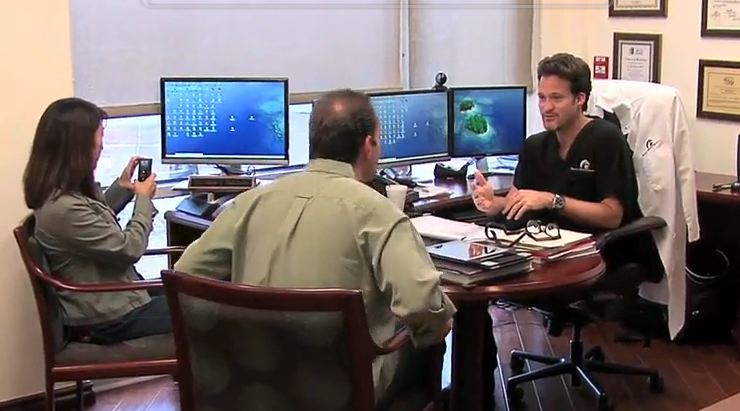
Boca Raton, Florida – Dr. Alan Bauman, a leading hair transplant surgeon and founder of Bauman Medical Group, will perform the first-ever hair transplant broadcast live on YouTube on Friday, November 18. YouTube “Weblebrity” Kevin “Nalts” Nalty, whose videos have been viewed more than 240 million times, will be documented as he receives his second hair transplant with Dr. Bauman on YouTube’s new, highly-anticipated interactive live webcast platform.  The surgery makes for compelling yet unlikely entertainment for the online video giant that is also debuting new live channels from celebrities like Tony Hawk, Madonna, Ashton Kutcher, Shaq and Rainn Wilson.

The event kicks off at approximately 10:00am EST when Dr. Bauman will harvest individual hair follicles from the back of Nalty’s scalp using the Follicular Unit Extraction, or FUE, method.  A second broadcast will take place at approximately 1:00pm EST, where he will show how those follicles are carefully implanted into Nalty’s scalp to produce a permanent, natural hairline. The 1:00pm webcast will also include a live ‘call-in’ Q&A segment hosted by best-selling author and The Bald Truth’s radio talk show host, Spencer Kobren.
Bauman and Nalty are anticipating even more response to Friday’s event as consumer interest in hair restoration is higher than ever, and new techniques like NeoGraft FUE, which will be used again for Nalty’s procedure, have made hair transplantation a less invasive and less detectable option for the estimated 100 million American men and women with thinning hair.What is NeoGraft/FUE?FUE or Follicular Unit Extraction is an advanced minimally-invasive hair transplant technique which, according to ISHRS statistics, has experienced an exponential increase in volume worldwide over the past several years. FUE eliminates the need for doctors to remove a large strip of skin from the back of the scalp—a procedure known as a linear or strip-harvest—and therefore leaves no linear scar.The FDA-cleared NeoGraft is a dramatic advancement over previous manual FUE methods which were more time consuming and less accurate.  Years ago, Dr. Bauman became the first Diplomate of the American Board of Hair Restoration Surgery to routinely use NeoGraft device for mechanical FUE which comprises 90% of all transplants he performs today.“FUE is an extremely effective surgical option for patients that allows for a quicker, more comfortable recovery, less post-op activity restrictions, as well as avoiding the tell-tale linear scar associated with traditional hair transplants,” says Dr. Bauman.  However, patients should keep in mind that a natural FUE hair transplant still requires keen artistry and precision and should be performed by a surgeon with extensive specialized hair transplant training, certifications and experience.Key Benefits of NeoGraft FUE:
    Least invasive hair transplant available No ‘tell-tale’ linear scar where the donor hair is harvested Shorter, more comfortable recovery No stitches or staples to be removed Less activity restrictions after surgery Very short haircuts are possible after surgery Transplants more than twice as many hair grafts in a single surgery as the previous manually-performed FUE surgery in the same amount of time
While the benefits of FUE hair transplantation are undeniable, celebrity endorsements help build consumer confidence and awareness.“My celebrity patients are usually reluctant to reveal their hair restoration work,” says Bauman. “However Nalty and Benson are part of a more open generation of celebrities… or weblebrities. Like ABC‘Anchorman’ Jim Abath and NBC Dateline’s ‘Follicle Five,’ they’re helping de-stigmatize hair transplants as a viable hair loss treatment, and help people understand that so much has changed with hair transplantation since the days of old ‘hair plugs’ or ‘strip’ scars.”
“The procedure was pretty much pain free, and it’s actually an engaging process that’s more art than science,” says Nalty. “I love sharing it with my viewers because I feel like Fred Rogers doing a tour of a candy shop.”

Hair loss can be a painful experience for both men and women, but today, scientific advances have made hair loss a treatable condition and hair transplants can now be performed 100% undetectably without the pain, scars and long recovery times that used to be associated with the procedure,” explains Bauman. “I hope viewers can learn from Nalty’s public journey and discover the abundance of resources available from the relatively small number of qualified doctors who specialize in hair loss.”
ABOUT DR. ALAN BAUMAN:Alan J. Bauman, M.D., founder of Bauman Medical Group in Boca Raton, Florida, is a full-time board-certified and internationally renowned hair transplant surgeon whose pioneering work has been featured extensively in the national and international print and television media, such as Newsweek, The New York Times, Cosmo, Vogue, Allure, Men’s Health, Today Show, The Early Show, Good Morning America, Extra, Access Hollywood and Dateline NBC.Dr. Bauman is recognized within the medical profession as top U.S. medical expert on the treatment of hair loss in men and women. A board-certified hair restoration surgeon, Dr. Bauman was the first to demonstrate ‘live’ the FUE method of hair transplantation at the 2003 International Society of Hair Restoration Surgery Orlando Live Surgery Workshop and the first to demonstrate the NeoGraft FUE device at the ISHRS Orlando Live Surgery Workshop in 2010. His practice is divided equally between male and female patients, and Dr. Bauman provides state-of-the-art diagnostic procedures and a multi-therapy approach to the medically treatable condition of hair loss. Dr. Bauman is a member and often a featured speaker at the American Academy of Anti-Aging Medicine and the International Society of Hair Restoration Surgery Annual Scientific Meetings.

Before & After FUE Hair Transplant

Posted by Sarah Sweetz Akhza On 5:42 AM 0 comments
During the live patient viewing at ISHRS's national meeting, a lot of people wanted to know how long it's been as they examined my new hairline and the donor areas.

Without moving around my hair and using a scope, nobody was able to notice any donor scars since FUE (follicular unit extraction) doesn't involve a surgical slice of the scalp- it's individual follicles and done while you're wide awake and numb.

My friend Joe Shields had taken the photo on the left before I had the transplant (late summer 2009) and we tried to replicate it last month (about 14 months post surgery). There are some variations in the lighting and smile, but I carefully chose the closest shot... some of the "before pictures" were way worse than this one. But I resent when people manipulate before and afters so I'm trying to avoid that here.

The photo on the very bottom shows why I wore a hat and avoided profile shots. The soldiers were not exactly in full force up there...


Why FUE is Like iPad Technology

Posted by Sarah Sweetz Akhza On 4:33 AM 0 comments
I read a comment on a blog from a jaded patient who claims FUEs have a lower "stick" rate than hair transplanted from a strip of hair (this guy must have a sad story because he occupies a lot of his time with negative comments on this blog, YouTube and forums).

I did expect a slightly lower success rate as one of the minor potential downsides of FUEs, and here's an article on the subject. Again- the traditional method of hair transplant is to remove a strip of "donor" hair via incision from the back of the head, then suture it together.

For a guy that doesn't like "surgery" or blood, FUE was far more attractive, and I was willing to accept the possibility that the hairs wouldn't stick as well.

For me, this was offset by a) the fact that I'm a good candidate for FUE (not everyone is), b) I like the variety of hairs in the new region (density/type) because it looks more realistic than the course ones from the back, c) I'm confident that we're advancing on FUE success rates.

What's important to realize is that most new technology advances aren't perfect from day one. Look at the first computer tablet or even the first iPhone. If you judge today's iPad or iPhone by those standards, you'll find great improvements.

I'd assume the same to be true with FUE (although I can't find data yet- it may or may not exist). As doctors get smarter about their extraction tools (Dr. Bauman used Neograft from me, which is quite different from using leeches or toothpicks to wedge the follicles out individually).

Unlike iPads, however, FUE-transplanted hair is not FUE-transplanted hair. There are many physician-specific variables, just like with traditional incision transplants... and I don't think there's a hair-transplant physician that has migrated entirely to FUE. It's also vital to have a good FUE extractor dude (whatever they're called) who knows which hairs, what circumference is ideal, and how to pluck and save 'em.

So it's worth asking your doctor about experience, and consider that "little things" mean a lot. The circumference around each follicle is maybe the biggest factor. Then there's how they're sucked, stored, etc.

The key point for me is this: accept that as an "early mover" in any new technology you're not going to get the benefits of the laggards. So you have to decide: do I want to wait until it's sorted itself out, or enjoy something new as soon as possible? It depends. For FUE, I thought Bauman had enough experience to comfort me. But at the same time, I'm not buying the first version of iPads. I'll wait until the second generation and let the kinks work themselves out.


7 Month Post Hair Transplant Photos

Posted by Sarah Sweetz Akhza On 8:23 AM 0 comments
Here's a photo I just took (March 21, 2010) after a haircut, so you can better see the hairline.

This is almost exactly 7 months after Dr. Bauman did his magic on me (should be a bit more than 50% of the benefit visible now, with 90% after a year).

It's hard to compare the location of the hairline in these photos, but you do see a density (different lighting conditions aside) that I didn't have before. Basically if I let my hair grow before I'd get these nasty patches and then blank spaces.

Much more even now. I may go hat free when it gets hot! :)


Compare to a few photos I took before the transplant. Whatya think?


Want White Teeth or Better Hairline?

Posted by Sarah Sweetz Akhza On 2:36 PM 0 comments
According to a recent RealSelf.com survey (see press release by Dr. Bauman), guys want better hairlines second only to whiter teeth... and 20% of the 2000 plus adults said they wanted hair transplants.

Bauman's release observed that this number was deceptively low. Had it included some of other red "widely available and non-invasive hair loss treatment options like Low Level Laser Therapy (LLLT), finasteride, minoxidil and dutasteride, the percentages of interested men and women would have been even higher.”

Yo RealSelf.com. Youze be writing about men and hairloss and not consulting the King of Social Media for Hair Renewal?

Also according to RealSelf... 90% of celebrities get work done... but few confess. Yo, celebrities... how about giving normal people permission by talking about what you've had done? Is that too much to ask?

Most-Viewed Live Hair Transplant Ever

Posted by Sarah Sweetz Akhza On 6:41 PM 0 comments
Greg Benson, the follicularly challenged brains behind MediocreFilms, has selected Earth's best hair-transplant doctor to update his Bosley transplant (see video). With more than 13,000 live viewers via the Internet, this would indeed make hair-transplant history.

Dr. Alan Bauman, who you may know as SurgeonOfNalts, did the work... and now it's a race to the finish. Will Nalts (me), the YouTube personality who once pitched Propecia, have the best hairline of 2010? Or will Greg? In a great moment of irony, Benson's sporting the old Propecia mirrors. Ah, the days that we pharmaceutical firms could give out tissue boxes, pens and mirrors. Those were the days.


Benson made me proud when he, like perhaps every male transplant candidate, made the obligatory joke when one of Bauman's peeps warned him about the loud, wet and cold cleansing-wash machine. It's funny because it's predictable, like his inclination to yell "bye MiniMi" before he runs over midgets.

Nearly 3500 new follicles (which represent a few hairs each) may be a record for a minimally invasive (no surgical slice) transplant. Dr. B uses a NeoGraft to do follicular unit extraction (FUE). Cutting edge that's so cutting edge, it doesn't require a cutting edge. Here's a photo of Benson, with wife Kim Evey (producer of TheGuild and star of Gorgeous Tiny Chicken Machine Show).


Go, Greg. As YouTube funnyman Mark Day exposed, there are some side effects as I well know. Here's some footage I just found that someone took of my live Internet broadcast during treatment, and here's my summary video called "Hair Transplant Fun."

Also worth watching are the educational videos we both did. Here's my conversation with Bauman (which summarizes the steps in 5 minutes), and here's Benson/Bauman talking about the entire procedure. Benson said he slept like a baby after his transplant, which is not what he experienced years before with the traditional surgery from Bosley. In a sequel to Alan's interview, the duo speak about how even a year ago this 3K plus process wouldn't have been possible, and about the recovery phase. After 6 months, you don't notice much, but by 10-12 months you'll see 90%.
Benson and I spoke recently, and are just gaga over this experience. In my Merck/Propecia capacity, I had lots of insights on the best hair-transplant surgeons. When I asked people who they'd chose, Bauman's name came up constantly. We both know why.

Benson did it for his acting career, and I did it because 3 years working on a medication that treats hairloss will make you somewhat self conscious.

With all of this buzz, one can only hope that hair-transplants don't need to be secrets. Some of the film and television actors and actresses you love have had these procedures, but you wouldn't know it. Why?

  1. They don't talk about it because they feel it would hurt their image.

  2. The doctors can't reference their celebrity patients... unless they're weblebrities who chose to take themselves a bit less seriously.


Why the Hat?

Posted by Sarah Sweetz Akhza On 4:57 AM 0 comments
A viewer asked why I'm still wearing a hat after Surgeonofnalts added 15-eyebrows worth of hair to my head... some facts about post-hair transplant growth...


Famous YouTube Guy Gets Hair Transplant

Posted by Sarah Sweetz Akhza On 5:17 PM 0 comments
Greg Benson, actor and "Mediocrefilms" and "Mediocrefilms2," got a hair transplant this week from SurgeonofNalts (Dr. Alan Bauman).

Now it's a race to see who can have the best forehead by spring. I have two months of a headstart, but Benson had a Bosley transplant when he was 30 (about 20 years ago).

On your marks. Get set. Groooowwwwww.


Well here's a 5-minute video that takes you through the 7 steps of a simple hair transplantation. Dr. Bauman and I documented the NeoGraft FUE procedure in layman terms... it's on the SurgeonofNalts account, and Greg Benson (Mediocrefilms) is the next candidate for a hair transplant this week.

We discussed this video during tonight's "Bald Truth" show. I hope you find this informative and mildly entertaining. :)


Nalts Hairloss Videos & Hairloss Education

Posted by Sarah Sweetz Akhza On 2:40 PM 0 comments

I just finished editing a fun video that explains my procedure in my language, as well as in medical terms. The video -- hosted by me and Dr. Bauman -- is designed to help educate hair-transplant candidates through the various steps of a follicular unit extraction, and show how the NeoGraft left no scaring on the back of my head. Here's a photo of the back of my head 24-hours after surgery, and 2 months later. No incision scar because the hairs were taken from random spots! More importantly, because the donor hairs weren't from a single strip, Dr. Bauman was able to pick various grades of hair to create a forehead that's more natural... as opposed to that Frankenstein look. Which would be cute this weekend, but not beyond that.

I learned today that Bauman uses NeoGraft to, in fact, conceal transplant scars. So if you had a transplant and decide to enhance it... you can use some of your individual grafts to hide the scar. Cool.

Here are a bunch of the videos documenting the journey. Stay tuned for the educational one. Dr. Bauman is sharing that on his YouTube channel....


No Scars on Donor Area of Transplant

Posted by Sarah Sweetz Akhza On 7:38 AM 0 comments

When you get a normal hair transplant, you have a big ol' scar on the back of my head. Check out this photo of my head the next day. Pretty clean, thanks to FUE (follicular unit extraction) and we did nearly 2,000 grafts.

Italian Prime Minister "Comes Out"

Posted by Sarah Sweetz Akhza On 5:05 PM 0 comments
Well we've started a fad. Seems Italian Prime Minster Silvio Berlusconi has "come out of the closet" with his hair transplant, and has become "the poster boy for male hair transplants and their age-defying benefit." (Source: Financial Times).

This excerpt is interesting. It puts the technology progress in layman terms, and gives you some insight on what guys go through before getting a transplant, which Beacon (see below) calls "no less painful than going to the dentist." I beg to disagree. It's a hell of a lot easier than going to the dentist. For starters, hair-transplant physicians are slightly less socially awkward.

But today’s hair transplant technology is as far removed from yesterday’s as the iPhone is from the clunky 1980s car phone. Brian Beacom, a 53-year-old journalist and author of Diary of a Hair Transplant: A Journalist’s Search for David Cassidy Hair (Phantom), waited more than two decades before going ahead with the procedure, watching the technology develop until it had been perfected. Beacom says: “Going bald really highlights the ageing process. You look 10 years older if you haven’t got hair, and you can look 10 years younger if you have it. Now people react to me differently, especially bald men who don’t know I have had a transplant; they look at me with a certain amount of envy.”

My Hair Transplant Video Got Squirrel Bombed

Posted by Sarah Sweetz Akhza On 1:14 PM 0 comments
Not familiar with JimmerSD's term "Squirrel bomb"? It's kinda like getting rickrolled I guess.


Nalts Hair Grows...

Posted by Sarah Sweetz Akhza On 2:30 PM 0 comments

Here's a couple "after" photos to show my new hair. It's kinda hard to see because they aren't next to "before" photos that match. The first was taken August. 26 and the second on August 30 (my surgery was August 18). Whatya think?

Most people think the hair-transplant procedure results are immediate, but it takes about 6 months to see 50% of the benefit, and a year to see 90% of the benefit. So I'm taking my Propecia and dabbing on my minoxidil (what Bauman calls the "sugar and caffeine).

Let it grow, let it grow, let it grow!

Live, Public Hair-Transplant Follow-Up Appointment

Posted by Sarah Sweetz Akhza On 2:23 PM 0 comments
Hey, if I'm going to broadcast my hair transplant live, why not the follow-up? In my first real live-broadcast (I've done 800 plus videos online, but the live thing always terrifies me), I conduct a live & public follow-up consult via Stickam with someone from Bauman Medical. And I try to stay focused as I read the myriad of insults so common on Stickam. :)


War Veterans Get "Welcome Home" Hair

Posted by Sarah Sweetz Akhza On 2:16 PM 0 comments
In an unusual publicity campaign, Bosley is offering free hair transplants to 19 lucky war veterans. Time to lose the buzz cut?

Aztarnet.com reports:
An international chain is aiming to change that with a contest offering free baldness cures to veterans of the Iraq and Afghanistan wars. Bosley Hair Restoration, based in Beverly Hills, Calif., recently launched a marketing push to provide free hair transplants to 19 war vets nationwide — one at each of its regional surgery centers, including the one in Arizona.
To apply, troops or their loved ones must submit a letter describing the service member's wartime work and "what a new, restored head of hair would mean to him/her." Southern Arizona personnel are eligible to enter, but the winner would have to travel to Bosley's Scottsdale clinic for the procedure, which normally costs $5,000 to $8,000.

To learn more, see "Bosley Gives Back."

Hair-Transplant Fun: The Videos

Posted by Sarah Sweetz Akhza On 12:51 PM 0 comments
Here are the first two videos, documenting my hair transplant! Now let's see if we can get a real celebrity to "come out." Don't forget to join me on "The Bald Truth" on Sunday at 8 pm EST.


Web Savvy Physician?

Posted by Sarah Sweetz Akhza On 11:36 AM 0 comments

How many web-savvy physicians do you know? My surgeon, Dr. Alan Bauman, has a YouTube account, a Twitter account, and Blogtv and Stickam accounts. He sends me an FTP file to upload video (almost ready to post first footage of my transplant), and today sends me a batch of photos from the event on Flickr.

Check me out! Note- you don't have to shave your head like I did, but it makes it easier and faster. Given that I was running around getting footage and broadcasting the surgery to hundreds via Stickam and Blogtv, I wanted to ensure the surgery didn't go too long.

Won't see the full benefits until 6-12 months, but already I have a hairline that looks like it's going to resemble my 1996 wedding photo. :)

10 Tips to Pick the Best Hair-Transplant Doctor

Posted by Sarah Sweetz Akhza On 8:08 PM 0 comments
It's hard enough to decide whether to get a hair transplant and how to afford one. Choosing the right doctor can be overwhelming. A Google search reveals countless objective and biased sources, and who has time to sort them all out?

Here are a dozen sample resources on picking a good doc, in no particular order. But I've summarized practical guidance below in 10 tips, so you don't have to go on a web safari to find the key considerations.

  1. WebMD: Picking a Surgeon
  2. US Hair Restoration
  3. OmniMedical Search
  4. Hair Restoration Advice
  5. Skin Treatment Guide
  6. eHow: How to Rate Them
  7. International Hair Surgical Group
  8. International Society of Hair Restoration Surgery: a leading organization with the world's worst logo.
  9. Life Tips: Finding a Hair Restoration Doctor
  10. International Alliance of Hair Restoration Surgeons
  11. American Hair Loss Association

Whew- that's a lot of content to "comb over." Now before I give you my own top 10 approaches, I should explain my two potential biases. First, I title this blog "The Hair Insider" because I gained some inside perspective while working as Product Director of Propecia (the only prescription product proven to save and grow hair). I met many of the leading physicians -- some made me cringe, while others seemed sincere. Still, I'm more likely to have a favorable view of those larger affiliations like MHR or Bosley (mostly due to the impressive Medical Director Ken Washenik, who struck me as a well regarded leader, despite a whole anti-Bosley site).

Second, I'm obviously partial to (Bauman Medical) because I had a positive experience with Dr. Alan Bauman this week (and I didn't need to pay full price because I am helping him market via online video). But in my own due dilligence (2 years considering getting a transplant), Dr. Bauman and his team in Boca Raton, Florida came highly referenced, well credentialed on television and print, and were often identified by peers as the guy they would choose. I felt like that mattered more than anything.

Biases disclaimed, I'm a former journalist who is sincerely trying to give fellow male-pattern hairloss folks thorough and objective advice to picking the right doctor or practice. Here is "the least you need to know":

1) Nothing beats a reference. True, I can't compare my Bauman experience with other doctors, but I was treated well, liked the staff, and I fully expect positive outcomes. If I hadn't heard so many positive things about Bauman, I would have wanted to speak with his patients -- both the ones who returned, and the ones that might have had a less positive experience, assuming they exist. If you get a reference, put the most stake in the one that comes from someone who had the transplant a year earlier, and can vouche for not just the experience but the ultimate outcome. And put less stake in the references you get from the practice, since those are clearly not drawn randomly.
2) Listen to "The Bald Truth" by Spencer Kobren, an author and founder of IAHRS. Kobren charges doctors for the exhaustive work he conducts to weed out the wackos from the credible surgeons with good reputations and patient experiences. I'm not sure all of the best surgeons are part of IAHRS, but I doubt many hacks are among them. Initially I called Spencer for a reference, but then decided to go with my gut, and called the guy I had met and had been well referenced by my colleagues as somone sincere, progressive, and talented.
3) Remember what's important.
If someone is pitching you hard on a specific doctor, take a step back. Don't shop by price-per-graft, or you'll get what you pay for. You want an experienced physician not a noob, but you also one who's not so late in his career that he's unlikely to keep current on the latest technology.
4) The doctor isn't the only factor. Hair transplantation involves a variety of roles: a doctor, a counseler, technicians, specialists, assistants. A good surgeon keeps his staff, and they become a well-oiled machine. Although the responsibility rests in the hands of the physicians, the tech team does a variety of critical work... from harvesting to implanting the hair. It's a team job, so ask about the entire team and don't get woed by the doctor alone. Now consider this tip when you assess the Bosley's or MHR. They've probably got good training, but ultimately the franchise name is less important than the doctor and team you get.
5) Don't worry about location. Hair transplantation can be done anywhere, but proximity isn't vital. It's convenient to have someone close, but far more important that you find the right team. The cost of a flight is trivial in the grand scheme.
6) Don't get pressured by the "consultants." These guys are important to keep doctors doing what they do best (surgery) and they can help you assess your needs. But they're often glorfied sales people, and they want to close the deal. I could not fathom approaching a chain via a consultant, because I'd feel like I was buying time share.
7) Look for passion not profit pursuit. My surgeon, who is about my age, always knew he wanted to be a hair transplant surgeon, and found his calling after dabbling briefly in cosmetic surgery. But there are other physicians that were doing general medicine, and decided they were sick of managed care and wanted the hours and money of cash-paying cosmetic patients. That's not the ideal profile for me.
8) Plunge into a community (Kobren's is called the The Bald Truth Talk forum). Here's a nice post that has some advice for the noobs. Another is the Hairloss Help Forum. These forums will help you learn from people that have, or are currently in your same boat. If you're the guy that likes Consumer Reports and ePinions, then you'll want to conduct thorough reference checks and ask loads of questions. But the references are certainly hand picked by the practice, and who has time for that? I believe in crowdsourcing, so if I see lots of posts and threads that are favorable about a doctor, I'll hope it's not someone "gaming the system" but real patients praising the best doctors (or slamming the worst).
10) It's a Buyer's Market. The transplant industry is not booming like breast augmentation or Botox, and some of the poor surgeons are fading away... while even the good ones are eager for new cases. That doesn't mean you want to haggle or shop and compare, but it means you don't need to feel rushed or pressured.

I long for a day when physicians can be rated by patients on such key attributes as "bedside manner" and "technical excellence." Indeed, perhaps there's a Trip Advisor for hair surgeons that isn't really a disguised pitch for one group or practice. Let me know, and good luck!

It's really hard to tell the difference in this photo, but it's one I just took from my laptop as an interim update (I'm editing the footage from the hair transplant currently). I ended up with nearly 2,000 grafts transplanted on Monday, but many follicles contained 2-4 hairs each (so we're talking about maybe 5,000 new hairs). In fact, the challenge was to find single-hair units for a tapered front line.

Here's more detail than you may want, but this describes the innovative new type of transplant I had (versus the traditional strip-harvest where they gotta take a chunk of your scalp off).

  • Notice how Dr. Alan Bauman gave me a circular recession, rather than a flat front (which looks abnormal). 
  • You'll see I volunteered to shave my head (optional) because I knew it would make things easier, and all of my camera hijinx and live web casts interfered with the otherwise efficient process of a hair transplant. Maybe half of people prefer not to shave the head, presumably because they don't want people knowing they had a transplant.
  • I had an FUE (follicular unit extraction), which means I had no surgical incision that's known as a "strip harvest." That means I'll have no visible scar on the back of the head, I experienced less pain, and benefited from a variety of different transplanted hairs (a range of densities) that aren't found in one strip. And nobody has to dissect the harvest strip into individual follicles. 
Hair transplants are basically moving "donor" hair to the forehead or crown from the back of the guy's head, where the hairs are higher density and not prone to harm by DHT, the nasty little substance that kills off hair. 

  • In an FUE, which is relatively new, they randomly grab follicles (containing 1-4 hairs each) with a tiny, sharp rotating knife tube (like a circular cookie-cutter). No pain. Then they quickly pluck 'em (or use suction) and place 'em in dishes until they're counted and sorted. Wanna see some photos of the FUE? It's not something I'd look at over breakfast, but trust me it's better than looking at a harvest (see gross picture).
  • Those little individual rice-sized hair follicles are later inserted into the tiny slits that Dr. Bauman carefully decorated on my forehead to resemble the natural pattern and angles of a normal hairline (in one of my videos, you'll learn this is the real art that separates the good transplant doctors from the ones that give you a Frankenstein or pencil-troll look).
  • Candidly, I'm glad I didn't do the normal "strip harvest" incision because it's an older and more invasive approach. Although strip harvest has advantages (you can do 3000-5000 follicles at one time, it's faster and less expensive), it's kinda freaky to think of a chunk of my scalp getting chopped off and dissected. FUE was once dismissed by transplant physicians because it's time consuming and (if they're not trained well) some of the hairs get chopped and don't grow. But if you're skilled at using an FUE tool, and have an auto rotating machine (Bauman used a "cutting edge" and expensive NeoGraft machine), then the process is quick and the success rate is high. 
  • My sense is that FUE will become the standard of care, especially for touch ups and folks that lack good donor hair along the back of the scalp. The trick is that surgeons need to be trained to do it quickly, but there's almost nothing but upside (besides cost) for the patient getting FUE. And FUE is easier to learn and do, so newer physicians and dermatologists are more likely to use them than fussing with incisions and strips (which have risks if you cut too deep, and fail if you cut too shallow).
  • I have a significantly lower hairline now, and it's going to be much more dense than before. I'll need to wait for the hair to grow out, and the maximum benefits won't be realized until 9-12 months or longer. Most of the new grafts will grow soon, then drop (maybe 30 percent will hang). Eventually, they'll get back into the normal hair growth pattern.
  • I can't wait to share the "behind the scenes" footage, because it's informative and really fun. I had a blast, and experienced very little discomfort (mild and short pain with the first anesthesia shots, and while some of the hairs being slid into the mini incisions toward the end of the day). Lots of post-operative treatments helped-- oxygen foam, bruise-reducing herbals, prednisone, pain medication, and even a pressurized oxygen tank -- where I watched a whole movie inside a 7-foot tube enjoying medical-grade pure oxygen (this heals, and has loads of other benefits). Harvest patients usually complain about the pain from the donor scar, but I can lay comfortably on a pillow because the only tender area is on my forehead.

More coming via the magic of video!